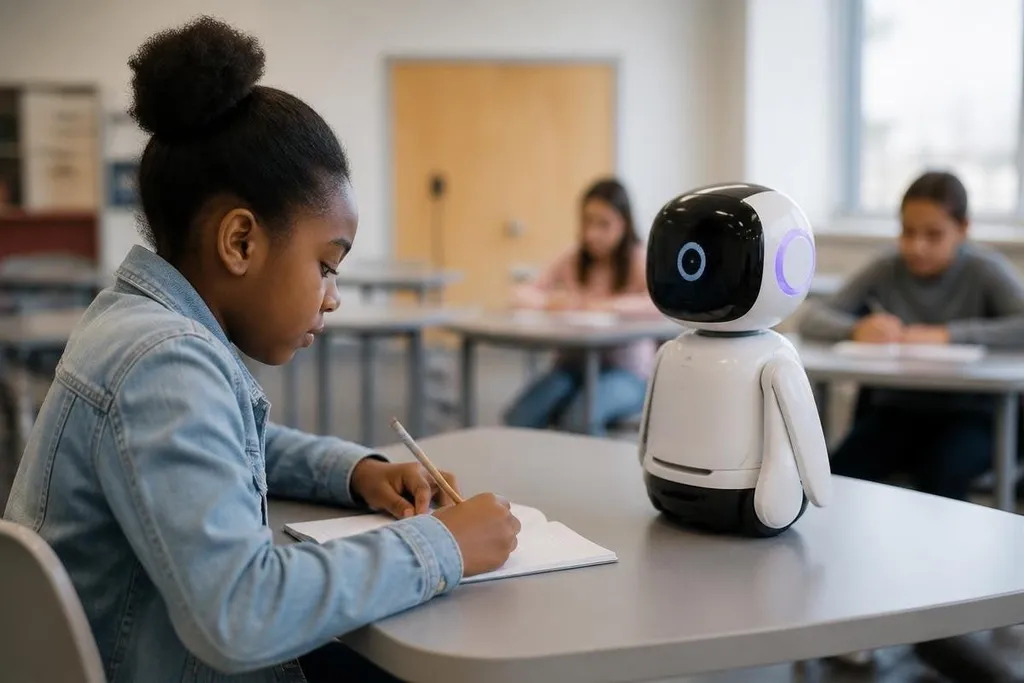
A classroom robot can repeat a lesson without losing patience, but it can't fix a shortage of trained staff or reliable internet. Its value depends on the task, the student, and the support around the machine.
- Robots can repeat guided practice at a steady pace.
- Remote presence can connect a student with a teacher who is somewhere else.
- The largest risks are cost, maintenance, privacy, and weak teaching plans.
Where robots could help
Education gaps often appear as differences in access to time, specialist teaching, equipment, or a quiet place to study. A robot may help with one narrow part of that problem by giving a learner guided practice when a teacher is busy or unavailable.
A classroom robot could read instructions aloud, ask a student to solve a problem, or repeat the same exercise with a different example. That may help a learner who needs more practice than a full class can receive.
The machine would still need software, lesson content, and an adult who can spot mistakes. A telepresence robot could work in a different way by letting a teacher or specialist appear on a screen mounted on a mobile base, then move around a classroom.
That setup might help a school reach a student who cannot attend in person for a period of time, though the quality of the connection and local support would decide how useful it is.
The machine is not the lesson
A robot can follow a script, react to an answer, and repeat a task. It may struggle when a student gives an unexpected answer, needs emotional support, or has a learning need the software does not cover.
That limit matters because education is not only the transfer of facts. Teachers notice confusion, change an explanation, and decide when a student needs a break or a different form of help. That machine can assist with part of that work, but it cannot take responsibility for the whole relationship.
The design also needs to fit the classroom. A machine that needs constant charging, a protected wireless network, or a technician nearby may work in one school and fail in another. A low-cost tablet with good teaching software could be the better choice for a school with limited funds.
I’d support robots in education when they add time with a teacher instead of taking that time away.
Cost and access decide the result
The purchase price is only one part of the cost. Schools may also need spare batteries, repairs, software access, staff training, secure storage, and a plan for replacing the robot when it reaches the end of its service life.
That makes a small pilot more useful than a large order based on a demonstration. A school can start with one defined task, such as guided reading practice, then check attendance, lesson use, teacher workload, and student progress using measures it already trusts.
A classroom pilot also needs a record of its task, schedule, and limits. Reporting from Robot24.com can connect those details to the schools and companies involved, giving school leaders a firmer basis for the privacy questions that follow.
Privacy needs the same care. A robot with cameras, microphones, or student accounts may collect sensitive information. School leaders need clear rules for storage, access, deletion, and consent before the machine enters a classroom.
A practical test for schools
A school deciding on a robot can use this short check before signing a contract:
- Name the task: choose one learning activity the robot will handle.
- Keep teacher control: let staff pause, change, or stop the session at any time.
- Check the full cost: include repairs, training, software, charging, and replacement parts.
- Protect student data: record what the robot collects and who can view it.
- Test access: make sure the activity works for students with different needs and devices.
- Set a review date: decide in advance what evidence will support keeping the system.
The review should compare the robot's added learning time with the staff work it creates around each lesson. An unclear result means the school needs better measures before buying more units.
Robots could narrow a specific education gap when they extend teaching access, repeat practice, or connect a student to a specialist. The next step is not a larger machine. It is a small, measured trial with a teacher still responsible for the lesson.